Tourist destination

Vinh Moc Tunnels
When we mention Quang Tri, we will immediately remember the painful land with many bombs and bullets, especially the pain of national division. Even though the wars have been over for half a century, the pain is still there, the clearest evidence being the historical relics that remind us of Vietnam's glorious period. One of the prominent places among them is the Vinh Moc tunnels of Quang Tri province, a magnificent underground architectural work, where the people of Vinh Linh live and fight hard to wait for the day of national unification. Vinh Moc Tunnels is located in Vinh Moc village, Vinh Thach commune, Quang Tri province. With the motto "not an inch away, not an inch away", the army and people of Vinh Moc dug more than 2,000 meters of tunnels, creating an "underground village" to live, fight and support Con Co island. Coming to Vinh Moc, you not only visit a relic but also touch the breath of history, feel the patriotism and extraordinary creativity of your ancestors. The weather in Quang Tri is typical of the Central region, with two distinct seasons: dry season (April - August) and rainy season (September - March). According to experience, the most ideal time to visit Vinh Moc Tunnels is: Dry season (April - August): The weather is sunny, warm, dry, convenient for moving and exploring outdoor attractions such as Cua Tung beach or Vinh Moc museum. Winter (December - March): Cool air, little rain, suitable for experiencing the cool space inside the tunnels. As soon as we stepped into the Vinh Moc tunnels, we could feel an unexpected cool feeling. The airy and cool wind system inside has surprised many Quang Tri tourists. That is also understandable because ventilation and ventilation factors to ensure the safety of hundreds of people living and fighting must be given top priority. The deeper you go inside the Vinh Moc tunnels, under the light you can clearly see the legendary red soil color here as well as the precise and scientific distribution of each area inside. In addition to being a simple fighting tunnel village, the tunnels also serve as an underground living space for local militia. It was their tenacious and indomitable spirit that gave them the ability to turn the underground into sturdy fortresses with three interconnected floors. According to travel experience, this tourist destination is considered a typical project of the Vinh Linh tunnel village system. The tunnels start from the well and radiate out into the tunnel, running zigzag in a Z shape to create solid bends, using earth walls to block the path of bombs and bullets if they accidentally fall. Not far from the tunnel area, the museum is a place to store war artifacts and recreate the lives of Vinh Moc people. The highlight is the famous painting To Be Or Not To Be, depicting the resilience of the people and soldiers here. In addition, you will see: Remaining bomb casings and bullets, testament to the severity of war. Documents and images about the tunnel construction process and the suicide boats supporting Con Co island. Located inside the tunnels, the cinema room offers a vivid experience with precious footage from the wartime period. The images of bombs, underground life and fighting spirit will make you emotional. First vent well: This is where the first pickaxe was placed to start the tunnel in 1965. The well does not contain water but plays the role of providing air, ensuring life for hundreds of people in the tunnel. Standing here, you will feel the magic of natural ventilation design, keeping the space always cool. The outdoor area displays remaining bomb casings and bullets, along with deep bomb craters, traces of a time of fire and smoke. This is the ideal place to take photos and reflect on the value of peace. To make your trip more enriching, you can combine visiting famous places near Vinh Moc Tunnels: Cua Tung Beach; La Vang Holy Land; Quang Tri Ancient Citadel... Vinh Moc Tunnels is not just a tourist attraction, but a place that touches the heart, arouses national pride and the sacred value of peace. When you step out of the dark tunnels, which were once a place of refuge amid the storm of bombs and bullets, and catch the bright sunlight shining down on the blue Cua Tung beach, you will feel more deeply the silent sacrifice of your ancestors to protect every inch of their homeland.
Quang Tri
1976 view


Truong Son Martyrs Cemetery
Truong Son Martyrs Cemetery is not only the resting place of more than 10,333 soldiers who died on the legendary route, but also a living testament to the resilience of an entire nation. Each tombstone here is a story of courage, of steps through the forest, across streams, of exchanging youth to regain independence and freedom. Join us to explore and learn about this heroic historical place! Truong Son National Martyrs Cemetery is located in the Ben Tat area, Vinh Truong commune, Quang Tri province, about 38 km northwest of Dong Ha city. With an area of 140,000 m² stretching over three hills upstream of Ben Hai River, this is the largest cemetery in Vietnam, gathering 10,333 graves of martyrs who died during the resistance war against the US on the Ho Chi Minh Trail. Started on October 24, 1975 and completed on April 10, 1977, this project is not only an eternal resting place but also a unique architectural work, expressing the deep gratitude of the nation. The graves are divided into 10 areas according to the hometown of the martyrs, along with one area for 68 unknown martyrs, all of which are solidly built and carefully cared for by the masonry team. Truong Son Cemetery is a place to commemorate the soldiers who died on the Truong Son route, an important strategic transportation route in the resistance war against the US. The idea of gathering martyrs' graves from all over the Truong Son route, including Laos and Cambodia, was proposed by General Dong Si Nguyen and approved by the Politburo. This place is not only a spiritual destination but also a space for educating patriotic traditions for the young generation. When you come here, you will feel the solemn atmosphere, the respectful silence, and the story of the sacred Bodhi tree growing behind the memorial - a symbol of protection for the heroic martyrs. Suitable time to visit: Especially on July 27 - War Invalids and Martyrs Day, this is the busiest time with thousands of visitors coming to offer incense and commemoration. The atmosphere is solemn and gratitude activities take place enthusiastically, suitable for those who want to immerse themselves in the historical space. January to March: Quang Tri's weather is cool at this time, with little rain, convenient for traveling and sightseeing. Or on major holidays such as April 30, September 2, or anniversaries related to historical victories, the Cemetery often attracts many groups of visitors and veterans. The cemetery is designed in harmony between architecture and nature, with the following main areas: Central memorial area: Located on a 32.4 m high hill, where a white stone memorial with a three-sided, hollow design is located, symbolizing loss but still rising proudly. Behind is the sacred Bodhi tree, with profound spiritual meaning. Martyrs' graves: Divided into 10 areas according to hometown (Hanoi, Thanh Hoa, Nghe Tinh, etc.) and one area for anonymous martyrs. Each area has a memorial house with unique architecture of each region. Relief and monument area: Relief works depicting images of Truong Son soldiers during the resistance war are the artistic highlight of the Cemetery. Green area and ornamental lake: With 60,000 m² of green trees and 35,000 m² of lake, this area brings a peaceful feeling, suitable for strolling and contemplation. The journey to visit this place not only brings deep gratitude but also helps each visitor better understand and appreciate the great sacrifices for today's independence. Visiting Truong Son Martyrs Cemetery is not only a trip, but also a journey back to history, with gratitude and national pride. With this guide, we hope you will have a complete, meaningful and memorable experience.
Quang Tri
1949 view


Quang Tri ancient citadel
Quang Tri Ancient Citadel is a destination that attracts tourists not only because of its unique architecture but also heroic historical stories associated with the heroic struggle of our nation. Quang Tri Ancient Citadel (also known as Quang Tri Ancient Citadel) is located in Quang Tri town, Quang Tri province. During the Nguyen Dynasty, this place was the royal headquarters and a military stronghold in Quang Tri province. During the French colonial period, the Ancient Citadel was the center of Quang Tri province. Until the General Offensive and Uprising in 1972, the whole world knew about the fierce and heroic 81-day and night-long war of the Vietnamese people right here. On December 9, 2013, Quang Tri Ancient Citadel was ranked as a special national relic and became a must-see attraction during your trip to Quang Tri. Quang Tri Ancient Citadel was built during the reign of King Gia Long, initially located in Trieu Thanh commune, Trieu Phong district, Quang Tri province. In 1809, the king moved the citadel to its current location. During this period, the citadel was still covered with soil. In 1837, King Minh Mang had the citadel rebuilt with bricks. Inside the citadel are works serving the living and working of agencies of the administrative apparatus at that time, including: Palace, Flag Tower, Tuan Phu Palace, Prosecutor's Palace, Bo Main Palace, Soldiers' Palace, Procuratorate, Military Camp, Kitchen, Warehouse, Examination Hall, Prison. In the early 20th century, after placing a "protectorate" government on Quang Tri, the French colonialists built a series of works inside to serve the ruling apparatus such as prisons, police stations, command posts... After the war, the relics were restored to sections of roads and city walls damaged by bullets. The four main gates were redone. The central area of the Ancient Citadel was built with a memorial and a common grave for thousands of soldiers who heroically left the motherland. In the southwest corner of the citadel, a museum was built to display relics, artifacts and recreate the fierce scenes of the war. Quang Tri Ancient Citadel was built in the familiar Vietnamese citadel architecture style. The citadel has a square shape with a height of more than 4m, the base is 12m thick and the perimeter of the wall is more than 2km. Surrounding the citadel is a solid moat system, and the four corners of the citadel are four fortresses jutting out. The citadel's walls were built solidly with large-sized burnt bricks, bonded with a mixture of lime, molasses and some other additives. The East, West, South, and North have four main doors. The path leading to the relic and the courtyard inside the citadel are paved with cement and planted with grass. To the west of the Ancient Citadel is the road leading from the right gate of the citadel straight to the banks of the Thach Han River, parallel to the bell towers, large parks and squares and flower-floating docks on both sides of the river. The bell tower was inaugurated on April 29, 2007. The tower is nearly 10 meters high, above it hangs a bronze bell with a height of 3.9 meters and a diameter of 2.15 meters, weighing nearly 9 tons. Bells are rung on holidays, full moon days... to commemorate the souls of martyrs. The memorial is located in the center of the monument and is also a common tomb, designed according to the concept of yin and yang philosophy with an octagonal shape symbolizing the eight trigrams, with four ascending paths symbolizing the four images and a double floor for offering incense. Above the second floor is a stylized communal roof with a traditional tai chi vase design. The memorial has 81 steps to climb, symbolizing the 81 days and nights of fire in the Ancient Citadel. In addition, to go up to the memorial, visitors must go through a total of 81 steps, symbolizing 81 days and nights of fierce fighting at Quang Tri Citadel. To the southwest of the relic is the Quang Tri Citadel Museum, which was built to preserve and display historical relics, letters sent home by young soldiers to their families, and statues recreating fierce war scenes. Quang Tri Ancient Citadel today still preserves a number of ancient works such as underground tunnel systems, city gates, temples and ancient prisons. Everything is covered with a layer of moss and trees, adding to the quiet look of the relic. Besides, you also have the opportunity to learn about the philosophy of yin and yang in the architecture of the Ancient Citadel. On Thanh's campus as well as the suburban area, there are many memorial works such as memorials, bell towers, museums, parks, squares... for visitors to experience and save memorable memories with friends and relatives. When coming here, visitors will relive the heroic moments of the past through meaningful and solemn activities such as offering incense to commemorate fallen heroes and releasing flower lanterns on the Thach Han River. Coming to Quang Tri Citadel, we feel like we can relive the heroic history of the "Red Summer" of 1972, even more honoring and appreciating the generation of our ancestors who dedicated their youth to the independence and freedom of the Fatherland. This place will forever be a red address for future generations to look towards, to remember and preserve the indomitable patriotic tradition of the Vietnamese people.
Quang Tri
1981 view


Happy Hills Quang Binh
Happys Hills Quang Binh is a famous tourist destination located 10km away from Phong Nha Ke Bang, located in Hoa Son village, Cu Nam commune, Bo Trach. This is a green eco -tourism area combined with a small cafe and delicious mountain forest cuisine. In essence, Happy Hills Quang Binh is inspired by an extremely famous virtual movie school film in Dalat. With the pristine landscape combined with the chilly weather on the hill, here you think you are really in Dalat. This eco -tourism area is a perfect combination of pristine hilly landscape and romantic river beauty. It is that scene that creates a relaxing space that cannot be more perfect for visitors. Located right next to the large forest is a peaceful and poetic lake. Coming here, you should choose a small space to immerse yourself and admire the scenery will definitely bring the soul of peaceful emotions. At Happy Hills Quang Binh, all nooks and crannies are carefully cared for. So wherever you stand, you will be able to save yourself the most beautiful and impressive moments. The small wooden house with vintage style is the most popular place for tourists at Happy Hills Quang Binh. To go up here, you have to go through a bridge made by hundreds of bamboo tubes. The feeling was both new and excited. At this house, there are more fresh flower pots placed in the corner creating romance and dreaming. The small wooden swing right on the green pine forest is the coordinates that you should visit when coming to Happy Hills Quang Binh. Sitting on this lovely swing, I just dropped my soul to fly with the wind and admire the natural scenery, thinking of this and I wanted to come right away. One of the most prominent highlights of Happy Hills Quang Binh is the beautiful cafe located at the top of the hill. Sipping a delicious cup of coffee at a height and the view like that is nothing better. The shop possesses extremely rustic, simple space because all items are made from wood and painted in vibrant colors. At Happy Hills Quang Binh, there is a cool, blue lake. This is not only a place to help visitors relax, absorb fresh air but also a check in for many young people. The romantic lake is covered with mountains and plants that make you feel like you are in Dalat city. In addition to possessing unique beautiful scenery, Happy Hills Quang Binh is also famous for its unique mountain specialties that make visitors. With delicious, clean food standards here provide some dishes such as: grilled sliced fish, shrimp and shrimp filter, greasy stream fish, traditional chicken sticky rice, whole pork, grilled chicken skewers, sticky rice, ... all have a rich flavor to create a memorable culinary party with friends and relatives.
Quang Tri
4262 view


Le Son Village
Founded in 1471, Le Son Quang Binh village has an area of about 770 ha. Over the past 500 years, Le Son village has been famous throughout Quang Binh with many ancient legends, charming scenery and writer. Le Son Quang Binh village also once ranked first in the bowl of incense of Quang Binh province: Son, Ha, Canh, Tho, Van, Vo, Co and Kim. Le Son Quang Binh village is like a coincidental limestone mountain range, the front is surrounded by romantic Gianh river, deep water like a soft blue silk strip around. Le Son village looks like a water -color picture, if you have the opportunity to travel to Quang Binh, please take the time to come here to admire the beauty of Le Son village. From the beginning to the end of the village is a road full of green bamboo balls stretching along the edge of the river, creating an extremely poetic landscape. Le Son Quang Binh has a back terrain leaning on 99 peaks, it is said that in the old days, there was a flock of 100 phoenix birds flying to find the land to establish the capital of Vietnam, when flying across this land saw the charming landscape, so it landed on 99 peaks in Le Son. Because of the lack of one last parking for the first phoenix, the birds flew away, so Le Son did not have the opportunity to become the capital of Vietnam. Besides, in order to escape the French enemy, Ham Nghi also chose Le Son Quang Binh village as a resting place on the way to Ha Tinh. During the two wars against French and the United States, 99 mountains running along the village were chosen by our army as a revolutionary base. In the old days, the peaks of Thanh Tuyen, Vu vi, Thi Dau, Hoa Cac, Bai Phong ... were shown to guard the French warship from Ba Don's warship from Ba Don. Hanges, Ong cave became the base of Military Medical 108, where the healing and nursing for the army before returning to fight. 99 mountains in Le Son Quang Binh village not only protects the soldiers and people in the years of fighting foreign invaders but also a place to avoid floods. Over the years, Le Son village has not suffered the devastation of floods as well as the sunshine, the harsh wind of the Central. In addition, nature has favored the village of Le Son Quang Binh a very magnificent mountain river terrain. The elderly in the village also recounted: In the past, there was a geography teacher passing through Le Son, when observing the terrain, mountain rivers ... said that this place was a land with a long vein: the dragon's head is located in Le Son, and the tail of the dragon in La Ha. Therefore, in history since Le Son Quang Binh village was established so far, there have been many talented and successful people here. In the old days, Le Son Quang Binh village was classified as "Bat Danh Huong" not only by Ky Tu, My Le mountain river, rich in the elected tradition but also by many young men and women, fertile land, fertile and extremely abundant sources of products. Moreover, Le Son Quang Binh village is also one of the villages with a system of rich cultural and cultural relics, valuable in architecture and art, and there are customs, practices, beliefs as well as diligent, filial piety, morality, honoring the beauty of generations of people in this land. Le Son Quang Binh village is also a place to converge and preserve many unique and pure spiritual cultural values with folk songs, dances, or jokes and folk festivals that make people heartfelt.
Quang Tri
4348 view


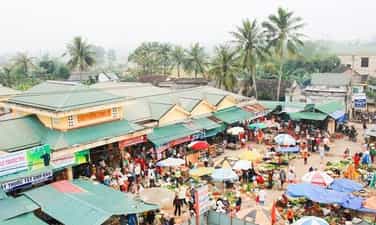
Cam Lo market
Since the 17th century when it was newly built, the Quang Tri Cam Cam fair has been considered as a leading trade and trade center. The famous market of the whole Thuan Hoa area and each session 5 days apart, starting from the 3rd of every month. From all regions flocked. Is the location that foreign traders choose to anchor to exchange busy goods. And in particular, in the 45-50s of the 20th century, this was an important revolutionary activity. Experiencing many ups and downs of history and time, nowadays, Cam Lo Foundation has no images like the old days. But it is always a place to store and promote the unique cultural features of a meaningful fair. : melon, tomato, fish sauce, salt, betel nut, ... of local people. Or the rich agricultural products and items brought from different regions flock to the busy trade. Today's life is much more modern, shopping habits have gradually changed with shops and shopping centers. But for the people of Quang Tri as well as some surrounding areas, Cam Lo's fair has become a culture that is hard to abandon. From the old people to the new children, everyone has a lot of memories with this place. Familiar with the market, the trader is eager to bring the goods from the previous night to keep up. People who go away just hope to have free time to go home quickly to keep up with the fair. Coming to Quang Tri Cam Cam fair with eagerness to live in a simple but special space and leave with smiles always on the lips. Culture is considered as flesh and blood, not only circulated in folk but also in Vietnamese history books. People or tourists come to this fair not only to walk around to visit the landscape of the countryside, with sellers bustling. But also to learn the beauty of folk culture with bold hometown and interact with friends. In the past, people who went to Cam Lo fair often were often busy dresses, but now there are no more images. But the monthly fair or especially at the end of the year, people everywhere are still dressed beautifully to visit the special market with the air like this festival. The session in Cam Lo once witnessed ups and downs in the history of this heroic land. Therefore, whether it is busy or famous as before or not, it still retains special beauty and meaning. Meeting the markets in Cam Lo and going to the market is not only a habit but also as a reminder of the values that his father has worked hard. Of a place that once resounded for a while, the place where the memories were never forgotten by the people here. The fair days in Cam Lo brings joy to everyone, from all roads of goods are brought back busy with the desire to expensive goods. Create jobs for traders, as well as reliable shopping places for people. Possessing a prime location close to the Ho Chi Minh trail. The development of a fair in Cam Lo in the future to become a trade and transit spot of international goods also brings a lot of great benefits to the local people. Cam Lo Fair was developed to help Quang Tri as well as the central provinces to thoroughly exploit the production strengths of the region, creating many trading products with Laos or Thailand. Help improve the life, improve and develop the economy of the whole region. On the other hand, this fair in Quang Tri also contributes to stimulating other service industries to develop. At the same time, promote culture, tourism and history to traders, tourists to visit and buy and sell at the fair.
Quang Tri
3796 view


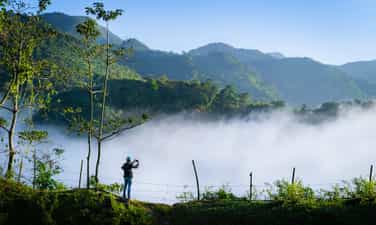
Cu Vo Peak
Cu Tai belongs to Huong Linh commune (Huong Hoa, Quang Tri) has long been given a place where the world is surrounded by: "Watching the most beautiful sunrise in Quang Tri province", "The most ideal place to hunt in Quang Tri province" ... and many other beautiful names for this place. From the monument of the victory of Khe Sanh followed Ho Chi Minh road about 10 kilometers to meet a junction. From here, turn left about 2 more kilometers to the top of the cu. Maybe from English, cover is turned into a place, meaning shelter, tunnel cover, outer cover. According to Huong Hoa people, there are 3 hills in this locality, 2 hills in Huong Linh commune and 1 in Phung commune. In the past, when American soldiers control the peaks often put "cu cu" in these places to hide. Although the locality has many hills, whenever they mention, people think of Huong Linh commune. The hill in the direction of Linh is 800 meters higher than the sea level, located in the old village. The old version was founded by the ethnic people of Van Kieu living next to the River River. Until Quan Hydroelectricity was formed, they had to relocate, a part of the village residents on the hill of settlement. However, after the wind power is construction, nearly 100 households in Cu held up again to move to another place. Currently, the four sides of the wind poles, works such as schools, community houses ... almost retain as evidenced by the presence of a small village that has existed in this place, the rest belongs to The management of Phong Lieu wind power plant. From Khe Sanh Victory Monument, going in the direction of Phung commune about 10 km, turning left 2 more to the center of the old village. From here on the hill, I am about 2 minutes to drive a motorbike. Cu Tai is a bare hill with only shrubs, sims and after (Phong Huong) grows. From here there will be a vision (view) million dollars, as the way of speaking of young people now. 360 -degree vision with four clouds and wind. The concrete road from Ho Chi Minh Road to the West branch to the Cu Cu was built by a flat, winding wind power joint stock company. The two sides of the trees are shiny. The road is poor with the steep, very craggy. One side is a cliff, one side is a deep. The eye of the distance is the Blue Hydroelectric Hydroelectric Lake. It was like going through Hai Van Pass to look at the East Sea by the mind of a person standing in the place between the land and the sky. Getting off the pass is a fairly wide "plateau". The terrain is relatively flat with the moderate slope that makes me think of a peaceful village, the smoking pig is located on the top of Truong Son, beautiful and mysterious among the darkness. The village has many houses and buildings but no population. Only the curious guests left far away to hunt clouds, welcome dawn. In order to make Cu grew more and more beautiful, more attractive, Phong Lieu wind power has planted thousands of peach trees and hundreds of cherries. In the near future, this unit will propagate sim, buy indigenous to plant hills where the wind poles. At the beginning of the spring, who had the opportunity to come here, the two sides of the flower road bloomed white, falling into thick carpets on the ground. There are roses of pink cherry blossoms under the yellow sunshine. Beside the cliffs, Cymbidium species with red and white flowers also appear to make the fragrance of the land in this sky gate. From the top of the cu, looking down is the old forest, further than the belt of the Hydroelectricity Lake, furthermore is the field of wind power. Standing here to explain why Huong Linh is the cradle of the wind. By the two sides of the mountain, only one slot in the middle is Huong Linh commune. This slot usually welcomes the wind all year round. But if the wind from the East Sea blows into the mainland, to the direction of the wind, the peak is like a screen in the west of Quang Tri.
Quang Tri
4014 view


Cape Lay
Referring to Quang Tri, tourists often remember Quang Tri Citadel, Hien Luong Bridge, Bay Moc Tunnels ... , belonging to Vinh Linh district. Machine Lay (also known as Mui Lai) is a stone nose encroaching on the sea about 500m, belonging to Vinh Moc village, Vinh Thach commune, Vinh Linh district, Quang Tri province. Cui Lay is about 7km from Cua Tung beach and about 40km from Quang Tri town to the north. Lay slims are known to the people in the area and the seafarers because there is a rather high nose lighthouse located on the mainland. The seafarer in the area for the lighthouse to nose to guide the beach trip, especially in the fog and thunderstorms. Hai Dang is an ideal place to admire a large sea. , enjoy the sea breeze, follow the seagull wings or see the offshore ships. The family travels by private cars. In addition, one thing that only when coming to Nui Lay you can experience. Those are the two most beautiful and meaningful moments of the day: Binh Minh with sunset. Early in the morning on the nose, the sun slowly appeared and dyed the horizon. The waves of the sea gently patted the shore, creating a peaceful space that is hard to describe. In the afternoon, the sunset gradually let go. The sun sank into the sea, leaving only a vibrant orange sky! It is undeniable that in recent years, the attraction of the Quang Tri nose is extremely large. The nose Lay has become a favorite check-in and camping point for both locals and domestic and foreign tourists. People often come here to set up a tent and celebrate the BBQ party. They enjoy the peaceful and happy moments together. What is better than being camping on the beach. Listen to the murmuring waves, watching the sunrise, sunset. And it is important to enjoy the dishes prepared by your own hands. These are things that not everyone has in the midst of a messy and chaotic life out there. In addition, the weather conditions in the nose Lay are also very supportive for these experience activities. The sea has white sand, flat, long. The sea is clear and cool. Smooth waves, not too strong. Thanks to that, the swimming of visitors will also be safe. After showering, people can use the ancient well water nearby. The well water is clear and cool. This is a unique highlight that everyone loves when coming to this place! In addition, this is also an ideal tourist destination for those who want to "escape the sun" without spending too much money or moving Too far away. With pristine beauty, fresh air and many interesting experience activities. The nose is really a place where visitors can temporarily put aside all the chaos of life and immerse themselves in nature, relax the soul!
Quang Tri
3802 view


Nose Treo
Quang Tri climbing nose is a beautiful sea located in Huong Bac village of Vinh Kim commune, Vinh Linh district, this is a tourist destination for a long time because of the scenery and amazing nature. The climbing nose is facing the East Sea with natural cliffs reaching out to the sea, not from this place, visitors will admire the Hung Vy mountain forest scenery along with the vast blue sea that is both wild and magnificent. Previously, Quang Tri climbing nose reached 150m, but because of the devastation of the war, the nose now reached out a few dozen meters. However, this place still possesses impressive scenery, is a place that is considered a paradise to ease the sadness of war associated with this loving land and gradually appear as a fresh, cool destination. Let the traveler stop. The most ideal time for checking-in climbing nose is from March until the month, at this time the climate is pleasant and few, so visitors can move to the nose to climb very easily and enjoy sightseeing. Quang Tri climbing nose has an impressive shape that makes it easier for people to associate with the check-in spots full of climbing like a turtle head in Ta Xua, the tip of the stone in Pha Luong or the stack of husband in Hoanh Bo. This place is brought to a different overall, beautiful landscape. One side will be a mountain of the forest and one side is the sea with white sand, golden sunshine. The opposition between the U -Tich forest and the romantic beach brings a space that is both spacious and mysterious. Check-in here, visitors will admire the very long stone nose reaching tens of meters to the sea to wait for the cool sea breeze or the bright sunlight of the day. Not only the nose is completely protruding into the sea, but this place also has a wild jungle or a long beach for a kilometer to Vinh Thai commune with a fascinating beauty, turquoise water, white sand At times of tide, visitors can see a 2000m2 reef very interesting with all shapes and magical colors, only 300m from the nose of Quang Tri. Check-in the nose climbing Quang Tri, set foot on the cliff to reach the sea, zoomed in watching the vast ocean or walking on the fine white sand to play with the waves, immersed in the clear blue water Surely the moment you feel like open, peaceful to the end. In the climbing nose, the moment you see the green forests, the flat surface of the sea with the people floating on the wave will see that it is very small before the majestic nature. Quang Tri climbing tip connected with famous landmarks such as Cua Tung beach, Hien Luong - Ben Hai, Vinh Moc Tunnels bring a unique and rich discovery journey to tourists. It is often said that if Vinh Linh is always remembered by heroic victories, the pain of war remains, the nose climb is a place where sadness is soothed by the beautiful and poetic landscape.
Quang Tri
4242 view


Lao Bao border gate
Lao Bao border gate is one of the important border gates between Vietnam and Laos, located in Quang Tri province, Vietnam. This is a destination not to be missed when traveling to Southeast Asia, because it not only plays an important role in commercial activities but also an attractive destination with famous tourist destinations nearby. At Lao Bao border gate, visitors can experience entry and exit processes, customs and health checks fully and conveniently. Types of transport and transportation through Lao Bao border gate are also diverse from buses, taxis, motorbikes to bicycles. Lao Bao border gate is located in the southwest border area of Vietnam, located in Huong Hoa district, Quang Tri province. This is one of the important border gates adjacent to Vietnam - Laos, located on Highway 9, about 80km west of Hue city. Lao Bao border gate plays an important role in trade and cultural exchange between Vietnam and Laos. This place is being built and upgraded with modern infrastructure, in order to meet the increasing demands of tourists and goods through this border gate. Lao Bao border gate is one of the important border gates bordering Vietnam - Laos. This border gate is located in the southwestern border of Vietnam, located in Huong Hoa district, Quang Tri province. This is a place with a noticeable history of formation and development. Previously, this area was the place where wars and confrontations between Vietnam and Laos took place during the Vietnam War. After the war ended, Lao Bao border gate was built and developed to expand economic relations and cultural exchanges between the two countries. In recent years, Lao Bao border gate has been upgraded and invested with modern infrastructure. In order to meet the increasing demands of tourists and goods through this border gate. Infrastructure is built, including roads, railway stations, customs and medical inspection areas, parking areas and reception areas. Lao Bao border gate plays an important role in trade and cultural exchange between Vietnam and Laos. This is the gateway for visitors to access famous tourist destinations such as Hue city, A Luoi eco -tourism area, Phong Nha - Ke Bang National Park and Vientiane capital of Laos. In the future, Lao Bao border gate is expected to continue to develop and become an important center of the border of the southwest of Vietnam, playing an important role in expanding the opportunity to connect and deliver. Cultural saving between Southeast Asian countries. Infrastructure and reception services have been improved and upgraded to meet the increasing needs of tourists and goods through this border gate. Policies and regulations related to entry and exit, medical and customs examination have also been improved to ensure safety and respect for culture and morality when traveling here.
Quang Tri
3931 view


